
We Didn't Lose Those Skills—They Were Taken
The skills our grandmothers carried weren't lost. They were taken by an economy that needed us to be consumers.
“The labor of women in the house, certainly, enables men to produce more wealth than they otherwise could; and in this way women are economic factors in society. But so are horses.”
— Charlotte Perkins Gilman, Women and Economics, 1898
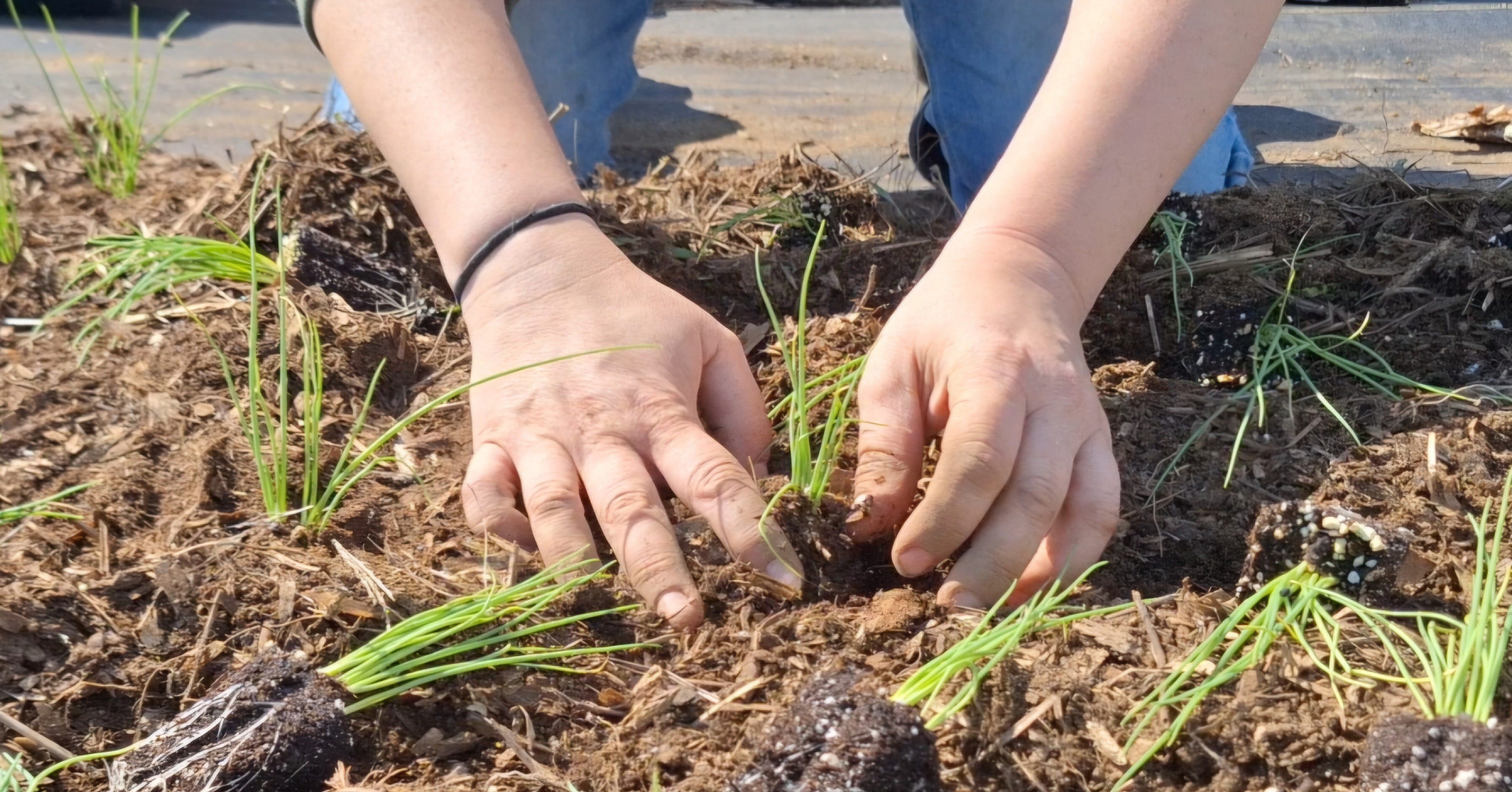
It’s Monday morning, and my hands are covered in dirt up to my wrists.
I’m putting in the first transplants of the season—onions I started under lights in February, lettuces and brassicas that have been hardening off on the porch for a week. By June these will be feeding my son and I. By September the onions will be curing in the barn and the broccoli will be vacuum-sealed and in the freezer. Come January, when the snow is piling up, we’ll still be eating from this bed.
This is not a hobby or self care, and it sure as hell is not an influencer aesthetic. This is grocery money I won’t have to spend, hands that know what they’re doing, and a small, daily refusal to depend on a system that has never had my best interests at heart.
This is women’s work—and it was never small.
What Was Taken, and How
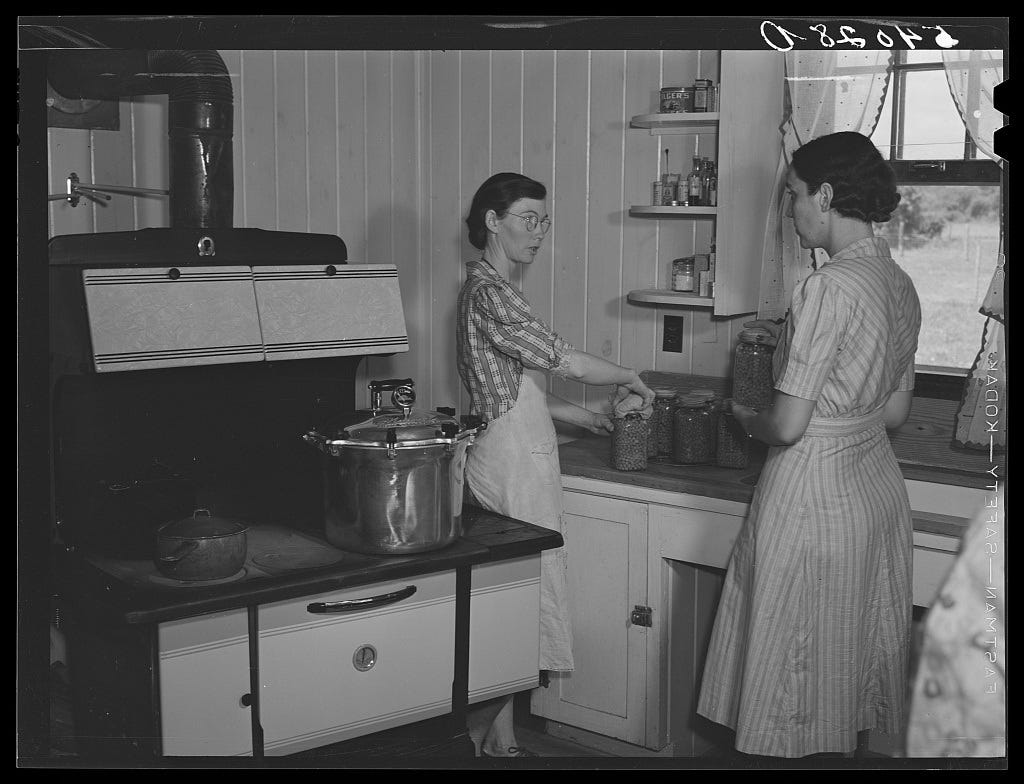
There’s a story we all know of the 20th century about how women were “liberated” from drudgery—the canning, gardening, bread-baking, and the mending. We were “freed” to pursue “more meaningful lives outside the home.”
But today, I am going to tell you the part of that story they leave out.
What women lost in that century was not drudgery—it was productive labor. We lost the knowledge of how to feed our families directly from the land. The confidence that came from being competent in the actual work of survival. It was the unbroken thread that connected my great-grandmother’s hands to her mother’s hands to her grandmother’s hands, going back as far as anyone can remember.
That thread was not lost. It was CUT. Deliberately.
It had to be severed—because productive women at home were a problem for an economy that needed paid workers and paying customers. A woman who knows how to grow her own tomatoes does not buy as many cans of spaghetti sauce. A woman who bakes her own bread is not buying Wonder bread at the supermarket. And a woman who can mend a coat does not need a new one every season.
So the work was reframed—deemed “old-fashioned” and called backwards. It was called something only poor women still had to do. And then, once the work had been thoroughly devalued and most women had stopped doing it, it was sold back to us as products, services, and lifestyle content.
The same skills that made my grandmother an essential pillar of her household became, two generations later, a $40 sourdough class on Instagram.
The Grief of Not Knowing
But here’s the part nobody talks about…
When you start trying to learn this work in your forties, having grown up on Pop-Tarts and microwave dinners, you encounter a particular kind of grief. You realize that you do not know what your grandmother knew. Then, you realize that your mother probably did not know either—and suddenly it dawns on you that there’s a wealth of knowledge that should have been handed down to you, and somewhere along the way it was dropped.
I have stood in my kitchen at 39 years old and cried because I did not know how to can tomatoes and there was nobody alive in my family I could call to ask. I have watched YouTube videos made by strangers to learn things my great-aunts could have just taught me in an afternoon. I’ve paid for books—soooo many books!—to teach myself the skills that were once absorbed simply by living near competent women.
That’s not nostalgia talking—it’s real loss. This is the grief of a thread that was cut, and the slow, deliberate work of trying to pick it back up.
If this is resonating, you’re in the right place. The Maine Homestead Life publishes free essays every Wednesday for women who are done being sold lives instead of living them. Subscribe and the rest of these arrive in your inbox.
What Reclaiming Actually Looks Like
I’m not going to pretend this is easy or romantic—because it’s not.
Reclaiming this work, here at Runamuk Acres in western Maine, looks like this:
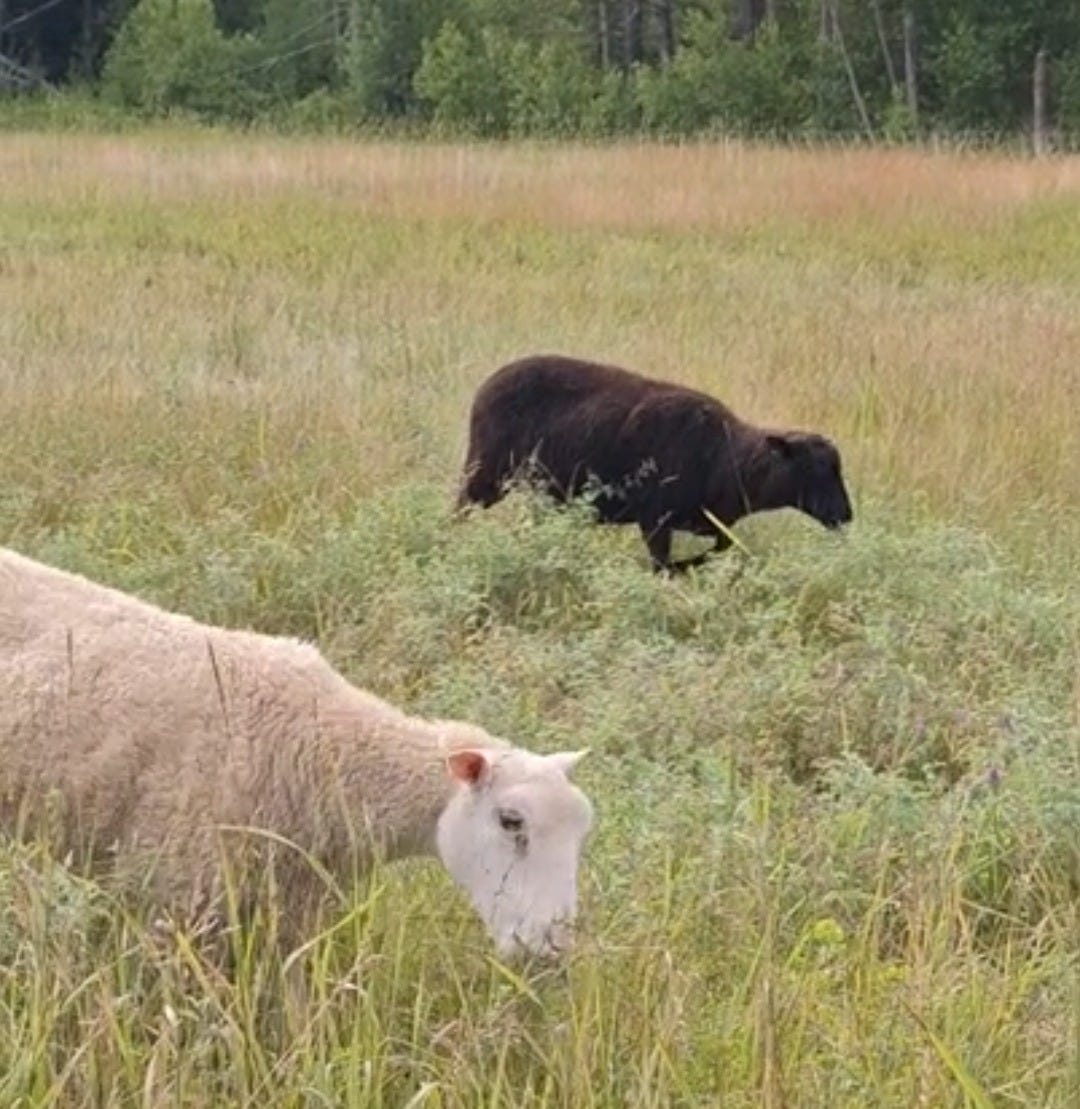
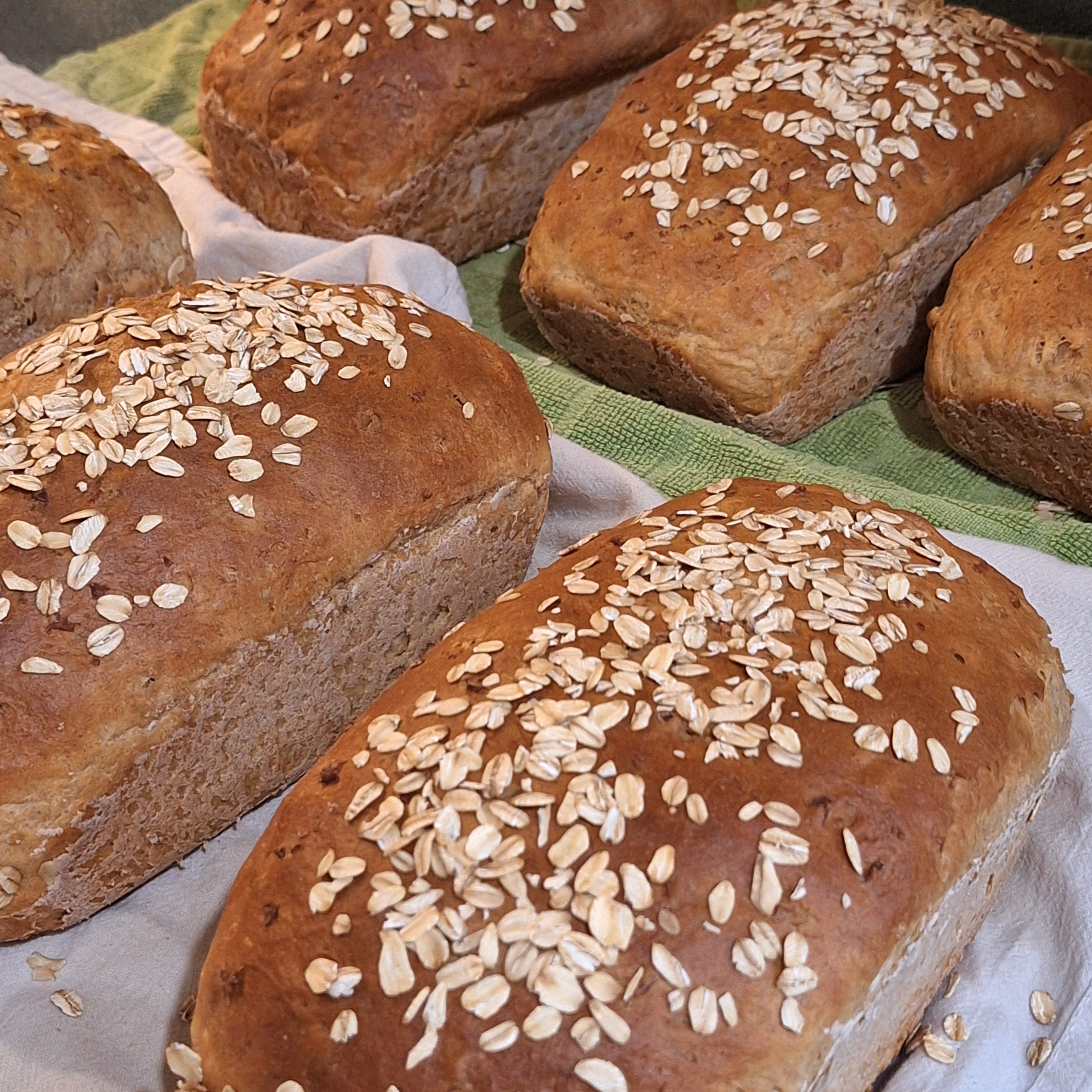
It looks like learning to keep a sourdough starter alive after killing two of them—true story. It looks like a freezer full of last year’s tomato sauce that I made myself, and a pantry that took me a decade to build to the point where I trust it. It looks like knowing what a sick lamb sounds like before I even see her, because I’ve heard it enough times now to recognize it. It looks like “shopping” for dinner from my own garden.
And it also looks like the failures. A busted pressure canner gauge I cannot afford to replace this month. A loaf of bread that did not rise last week because I rushed it. A row of carrots I lost to weeds because I was paying attention to other things. The work does not photograph well, but failures are just as much a part of it.
Every loaf, every jar, every meal I put on the table is a small piece of repair. It’s one more stitch put back into a thread that was cut.
It’s also—frankly—defiance.
Every time I do this work, I am refusing to participate in the version of my life someone else was trying to sell me.
A Note for the Woman Who Feels Behind
If you’re 38 or 48 or 58 and you’re just starting—listen to me:
You are not late. You are not behind. And you’re not too darn old!
The grief you’re feeling—that you should have learned this earlier—yes, that’s real. But it is not the end verdict. It’s the proof that you are paying attention NOW.
Pick one thing. Just one. Whether that’s bread or pickles. Or a four-by-four-foot raised bed. Or learning to sew curtains. Sure—the first time you do it, it will be hard and probably turn out ugly. The second time it will get easier, and by the fifteenth time it will start to feel like something you have always known how to do.
Hard things don’t get easier if we don’t do them, my friends.
This is how we repair those threads. One woman at a time. One skill at a time. One ugly first loaf at a time.
What This is Really About
The women doing this work right now—at kitchen counters and on small farms or in apartment kitchens with herbs on their windowsill—they’re not going backwards.
We are not playing at being our grandmothers. Nor are we running from the modern world. We are not trying to be "trad-wives," and most of us aren't even married. For those of us who are, the fight to share household labor honestly is its own thing. I wrote about that last year:

No—we’re doing something quieter and more dangerous than any of that. We’re refusing to stay where we were put. We are refusing to be the consumers some corporate economy decided we should be. We’re refusing to let competence skip another generation.
We are picking up the thread.
Women’s work was never small. It was made to look small. There’s a difference.
Until next time, farm friends!
—Sam


If this resonated, you can subscribe to The Maine Homestead Life—free weekly essays and how-to articles for women who are tired of being sold lives instead of living them.
If you want to go deeper, paid subscribers get access to the full archive, monthly Office Hours live Q&A, printable resources, and the essays that go beneath the surface of the work I am doing here.
Tell me in the comments: What is one skill you wish your grandmother had taught you—and have you started learning it?
Three ways to take this further:
1. The Seed-to-Table Garden Workbook — $7. The exact process I use with my 1-on-1 coaching clients. Pick the gardening methods that fit your context. Design a garden that fits your life. Get it here →
2. Upgrade to paid. Full archive access, member-only Office Hours, and the kind of deeper writing that won’t fit in a free post. Annual subscribers also get a virtual consultation included. Become a paid subscriber →
3. Work with me one-on-one. When you want another set of eyes on your property — what’s working, what isn’t, what to do next. Virtual consultations or in-person visits for locals. Learn more →
I wish my (now late) Grandma had taught me how to home can food. I wish I had gone further in Home Economics when I was in high school (heck I wish that going further would have been an option!). I could go on. But I'd be here awhile. 🫤
I especially enjoyed this part and the comments so thank you for expressing it so well. I have been doing this more and more (inspired by you and others) and now have a list of what I can make or grow myself in addition to what I need to buy, which gets ever shorter and in more bulk :). Part of that help is being gifted a winters worth of canned tomatoes and applesauce from my husband's mother and sister, who have lots of that knowledge to hand on and I feel very lucky in that. And am doing my part in making sure the next generation gets that as well. I grew up in a house where we ate from the garden and enjoyed my mom's homemade bread (i remember the first time she bought store bread as a teenager and we were like, this isn't even food :)) I think you are very right in the emotions attached, but I wanted to emphasize the fundamental part of community in this as well. It is what makes us independent and self sufficient but it is also the foundational fabric that creates a community, even in small acts of sharing knowledge as you do or abundance in our harvests. At its heart, it is how we nurture and sustain each other and make a broader family. One more personal note, I learned to quilt in middle school at the Indian House in Old Deerfield with some of my school friends and I vividly remember those times, quilting with them with hot chocolate and a lot of laughter. Quilting has been an important part of my life and skills ever since, and has brought me into communities of women that are lifelong connections, including teaching younger people how to enjoy that skill and gift it forward. That is the first thing I thought of in response to your question. Sharing that time and work is invaluable and often lost in that culling of our time and values.