
The Ground Work
How to build living soil and a garden that grows with you
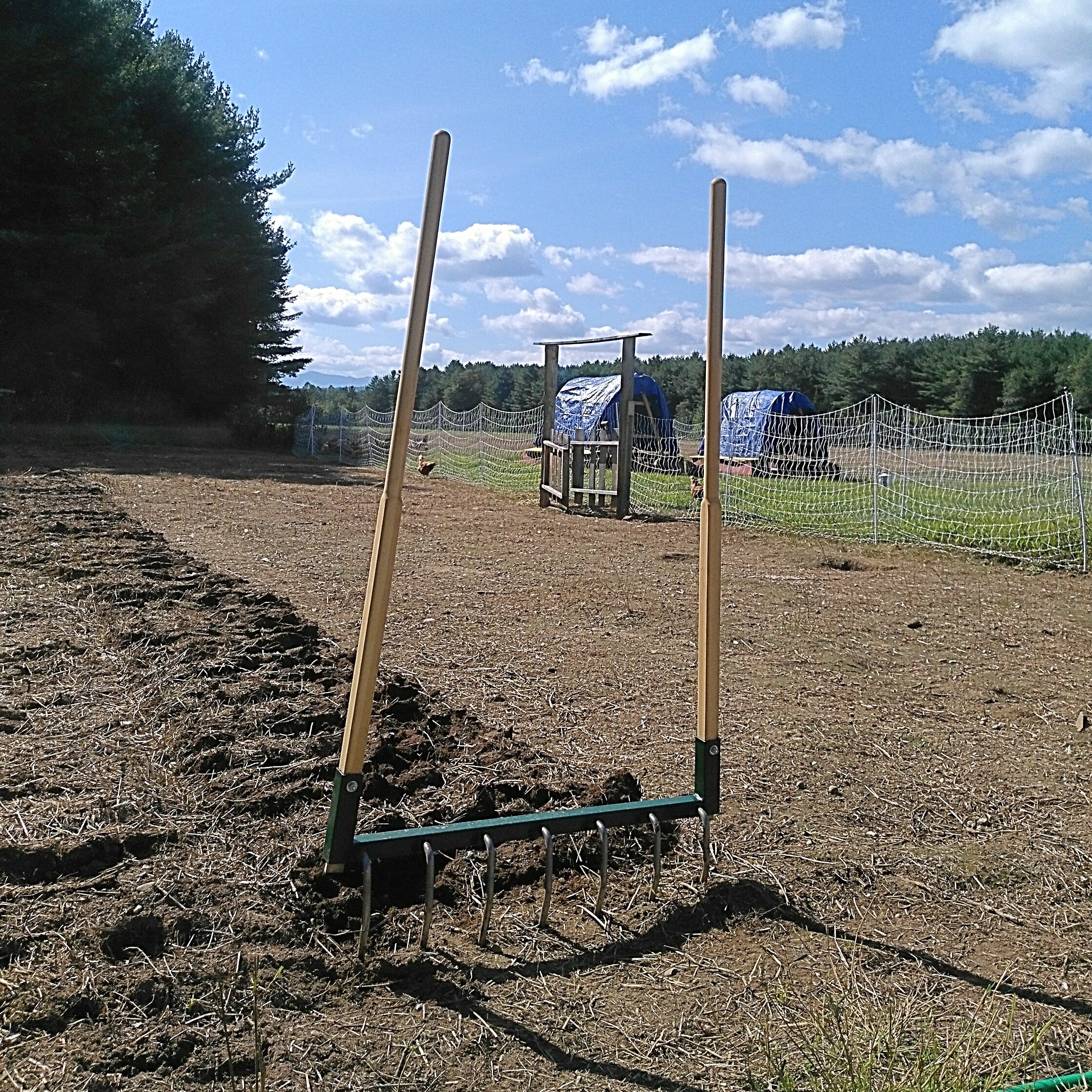
Driving the tines of the broadfork into the garden bed, I pulled back on the handles to lift the earth, marveling at what was underneath the surface. Seven years of chicken manure and sheep litter had transformed what was once sandy, lifeless ground into something dark, crumbly, and teeming. You could smell—and feel the difference.🪱
This didn’t happen by accident, and it didn’t happen overnight. Building living soil at Runamuk Acres was intentional work—slow, sometimes back-breaking, built on research and patience and the humbling understanding that only time can bring about the changes you’re seeking.
But it started exactly where you’re standing right now: with bad dirt and a hope and a prayer for something better.
This week's installment covers the ground work — the living soil and garden-building basics every new homesteader needs before they plant a single thing. We’ll cover the difference between dirt and living soil, how to read your ground before you do anything to it, and three different paths to building your first garden bed—so you can choose the one that fits your situation.
➡️This post is part of an ongoing series on homesteading. Find other valuable how-to articles, essays and more on our Resources page.
HI. I’m Sam from Maine Homestead Life, a newsletter that teaches the skills our grandparents knew: how to grow, raise, and make REAL food and live independently from corporate food systems.
Did you know that hitting the heart icon ❤️ above or sharing this post makes it easier for people to find this newsletter? It also shows me that you appreciate my work!
In This Post:
🪱Dirt vs. Soil
📗Read Your Ground First
🗺️How to Actually Create Your Garden
🧭Three Paths to a Living Soil Garden
❤️Path A: In-Ground Beds via the Smothering Method
☝️A Note on Traditional Tilled Rows
🧱Path B: Raised Beds
Path C: No-Dig/Lasagna Beds
💩What to Feed Your Soil
🤝The No-Till Commitment
✳️Action Item for This Week
🪜The Ground Work
🪱Dirt vs. Soil
My affinity for nature is rooted in the healing I found there as a child. From a young age I felt a connection to the Earth that is unparalleled anywhere else in my life. And when you care deeply about something, you’ll do whatever it takes to protect it.🤺
THAT is why I farm. Why I practice regenerative agriculture on this parcel of land I am blessed to call my own—to live on, to work, to steward.
🦠Through regenerative practices, I can actively promote the health and well-being of the land I serve. With so little control over current events or environmental policy, this land—these acres—is where my efforts can actually make a difference.
When I first established Runamuk back in 2010, I was consumed with “bee-fever”. A new beekeeper, obsessed and infatuated with honeybees, they opened my eyes to the intricate, interconnected relationships of the natural world. I became attuned to the thousands of pollinating insects beyond the honeybee and watched them work with genuine fascination. To think this single act of pollination had been ongoing for 160 million years, and here I was, witnessing it was profound to me. Back then, I believed that bees and beneficial insects were the single most important keystone organisms on Earth.🐝
Once I bought my own farm and began practicing rotational grazing and “feeding the soil” in earnest, I started to realize something even more fundamental: life below ground was far more important than anything living above it.
🍄I began studying Paul Stamets’ work with fungi and mycelia—the vast, invisible networks threading through healthy soil. I read “The Hidden Life of Trees” by Peter Wohlleben and discovered how entire forests are connected underground, how trees and plants communicate through signals nearly imperceptible to humans. I came to understand that without the mycelia and the organisms living in the soil, plants cannot access the nutrients locked in the soil around them. Mycorrhizal fungi act as an extension of plant root systems, dramatically increasing the surface area through which plants can absorb water and minerals. Without them, even nutrient-rich soil underperforms.
NOTE: To learn more about transforming our mindset to protect soil life—click here to go deeper and learn why the soil food web is so essential to the health of your garden.
In soil as poor and sandy as we have here at Runamuk, even minimal tillage quickly destroyed whatever fragile life had managed to establish itself. It became clear that if I wanted to grow anything, tilling needed to be eliminated from the plan.
✂️Here’s what tillage actually does: it cuts up underground fungal networks. It slices through earthworms and other soil organisms. Then it churns the soil, exposing all of that living matter to air and sunlight—conditions these organisms are not built to survive. They die. And you start over at square one every single time.
Compaction is the other silent killer of soil health. When soil is compacted—by foot traffic, heavy equipment, or even repeated raking—the air pockets between soil particles get crushed out.
Those air pockets matter: soil organisms need oxygen to survive, and plant roots need space to push through and expand. Compacted soil drains poorly, warms slowly in spring, and actively resists the root growth you’re trying to encourage.
This is the reason to have permanent paths—not just for convenience, but to concentrate any inevitable compaction in places where it can’t harm your growing beds. Every time you step in a bed, you’re undoing work that took months to build. Paths take the hit so the beds don’t have to.
The bottom line: soil isn’t just the stuff plants grow in. It’s a living ecosystem—and every choice you make is either feeding it or killing it.🐜
📗Read Your Ground First
Before you build anything, I urge you to take stock of what you’re actually working with. There are four basic soil types: clay, sandy, loam, and rocky (hello, Maine!). If you’re not sure what you’ve got, two simple tests will tell you everything you need to know.✏️
THE SQUEEZE TEST
🤛Grab a handful of moist soil and squeeze it in your fist. Open your hand. If it crumbles apart, you’ve got sandy or loamy soil that drains well and is generally workable. If it holds its shape and you can ribbon it out between your fingers like clay, you’ve got heavy clay soil that will need more amendment and drainage work. If it holds its shape briefly and then crumbles, you’re in good shape—that’s a reasonably balanced soil.
THE JAR TEST
🫙Fill a mason jar about one-third full of soil, top it up with water, give it a vigorous shake, and set it on a shelf for 24 hours. The soil will settle into visible layers: sand on the bottom, silt in the middle, clay on top. The proportions tell you your soil’s composition at a glance.
FORMAL SOIL TESTING
🔬Your county cooperative extension offers soil testing through the state university—here in Maine, that’s UMaine Extension. A full test will give you your pH, nutrient levels, and specific amendment recommendations. I don’t always send off a formal test, but I always read the ground before I do anything to it.
The next two sections share the three paths to cultivating a living soil garden, along with step by step instructions for marking out your plot, smothering, adding amendments and includes a printable PDF checklist for paid subscribers. Consider upgrading to access more valuable insight, tools and resources to help you on your farmish journey!