
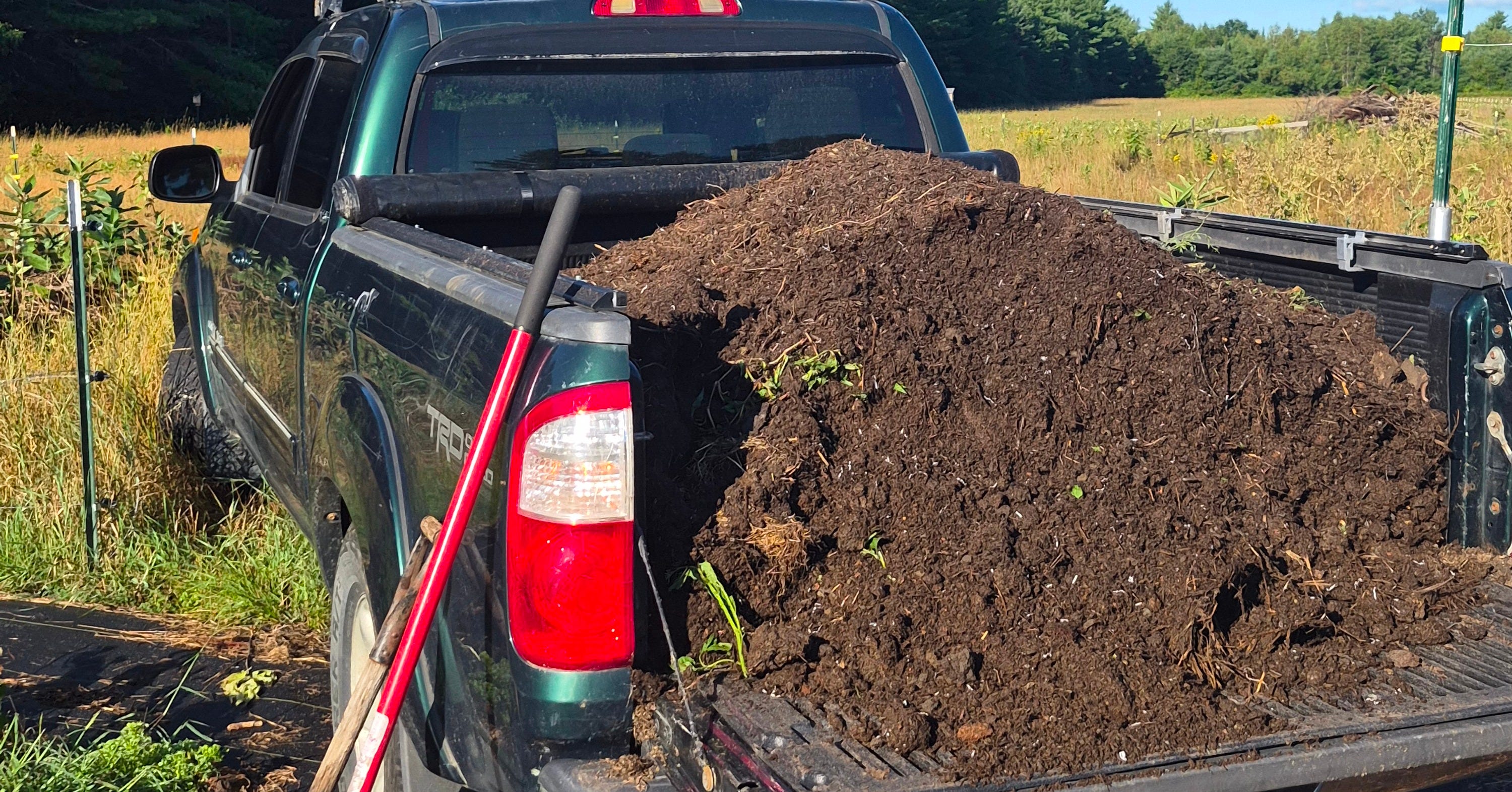
Steam rose from the manure and I was giddy with excitement as I backed the truck against the pile. How long had I been wanting to do this—not just to own a truck, but to finally be able to say yes the moment an opportunity like this shows up. Having my own pickup means I can act on good deals and opportunities that let me grow this farm in meaningful ways.
Three plots at the back of my garden desperately need inputs—compost, manure, anything—if I’m going to put them into production. So I’ve been monitoring Facebook Marketplace for available manure, with the goal of having that section ready to go by next spring. A heavy application of manure and a cover crop would set me up well.
There’s no going back now. All other doors are closed to me. I am farming—for my own survival—on two fronts: sustenance and financial.
Growing food is how I contribute to our household. As of May 2026, the USDA put the average family of four at $16,640 a year on food. For BraeTek and me—a 46-year-old woman and a 19-year-old male—I’d figure closer to $7,000, since I mostly cook from scratch and try to stay within what our EBT assistance gives us. That used to be $550 a month. But BraeTek’s getting older, and we’re being phased out of the program. So I have more incentive than ever to grow as much of my own food as I possibly can.
This is also my income. Selling produce and baked goods is how I earn funds to pay the bills, and the writing is the part-time job that supports that and makes solo-farming possible for me. That, and the fact that BraeTek is old enough now to contribute to household finances too.
Transformation has been the theme this season—for me and for Runamuk both. I’m leaning into market gardening, into being someone who specializes in growing and making food to feed people. I may not be feeding huge numbers of people, but I think it still makes a difference in this rural area. I want to grow MORE food, and really establish Runamuk as that small neighborhood farm that locals know “always has something good.”
That’s why bringing those other plots into production is paramount right now. Watching the manure get loaded into the truck bed, I was a tumult of emotion—pride, wonder, and humility that I’d managed to secure the truck in the first place; it took pulling my community together through a crowdfunding campaign to make that happen. There was the pain of selling the sheep to get there, mixed with the sheer joy of a gardener looking at rich, actively decomposing organic matter I’d soon be feeding my depleted soil, and the excitement of the potential I was creating for next season.
If any of this resonates—if you're farming (or building anything) on your own terms right now, with the odds stacked against you—I'd love to have you as a subscriber. Paid subscriptions are what make it possible for me to keep doing this work and keep writing about it honestly.
What’s Been Happening On The Farm


BARN RAMP PROJECT
It had reached a critical point, and I was increasingly worried someone would go through the soft, rotting lumber that made up the ramp access to the barn. Whoever built the thing used nails in the assembly, which meant it would be a hellova job to dissemble it. I’d been dreading the project, but it couldn’t be put off any longer. Finally, BraeTek and I set out to tackle it last week.
I asked to borrow a pry-bar from the neighbors—wonderful people that they are—and they brought their little tractor over instead. Rather than spending a week prying each board off one at a time, we hooked onto the ramp and pulled the whole thing off in one piece. Then those fantabulous neighbors of mine dragged it all the way out back to the burn pile I’ve been accumulating at the edge of the field. A job I expected to take days, maybe a week, was done in under an hour.
Sometimes the right tool makes all the difference.
BUTT-WHOOPING
Aside from the ramp project, not much else has happened on the farm—mainly because the garden’s been giving me a good butt-whooping. The thing about planting so many seeds is that eventually they’re gonna grow into food that needs harvesting. And that food needs to come off the plant at its peak, not before and certainly not after. So I’ve been picking every day, keeping the farmstand stocked and open all week with the abundance.
If you’ve done any amount of harvesting in your lifetime, you know exactly what kind of workout it can be. Climbing over and around plants so you don’t damage them, bent over, kneeling, crouching, leaning, stretching—it works every muscle group, but none more than your glutes and hamstrings. I’ve been going around complaining about my sore ass for two weeks now, running to keep up with the harvest, the farmstand, and the baking. Plus the writing, the podcast, a review from the FSA, and the gauntlet of red tape and hoop-jumping that comes with the grant money I’m hoping to secure for the farm.
It’s a lot, and I’ve been feeling the full effects—stress, overwhelm, a little bit of “what the fuck am I even doing?” thrown in there too. August is the busiest part of the growing season, though, and it won’t be long before things start winding down. I’ve already noticed the nighttime temperatures dropping—and a couple of chilly mornings here in western Maine already. Kids are heading back to school. The wheel of the year is turning.
Community Updates
Upcoming Events
NEXT ON TALKING DIRT
In my next live session of Talking Dirt, I’ll be joined by Helen Freeman of Me, My Pigs and I. We’ll be talking about corporate control of the food system, and what it means for anyone who eats.
➡️Friday, August 7th at 11AM EST.
PRESERVING THE HARVEST WITHOUT CANNING
August’s workshop for paid members, We’ll go over the system I use instead. Freezing, drying, quick pickles, and cold storage. Bring your harvest questions; we’ll work through them in real time.
➡️Thursday, August 20th @ 4PM EST
ICYMI
Talking Dirt | Episode 9 with David McIlroy - Using Storytelling to Grow Your Farm Business. Click here to watch that discussion.
Talking Dirt | Episode 8 with Robin Motzer - Cultivating Wildlife Sanctuary at Home or On the Farm. Click here to watch this now.
Latest RAOO post: What I Let Men Talk Me Out Of
No Going Back Now
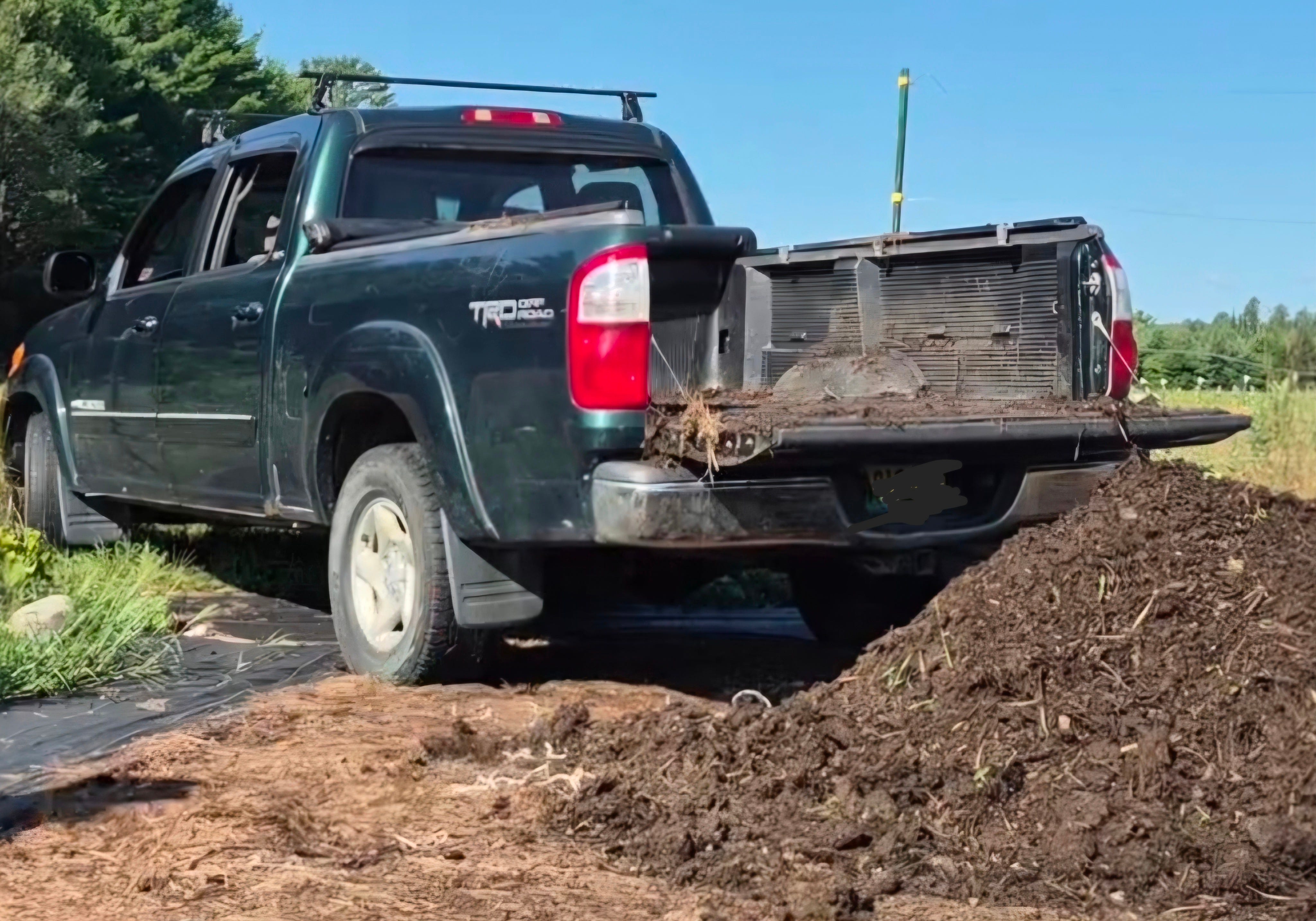
Using a hoe, I pulled as much of the manure out of the truck as I could reach before climbing up into the bed with a shovel. It didn’t take long, really, to empty the manure onto the garden plot, and when it was done I was pretty damn happy with myself.
The last few years have been uncertain, and I think it’s taken a toll on the farm’s reputation: my on-again, off-again relationship with baking and the farmstand, finances pushing me to take the job as school lunch-lady the winter before last, and the ill-fated second marriage this past winter. Business has been slow coming back, but not unexpected. I’m focused on rebuilding our customer base through improved reliability moving forward, and working to rebuild Runamuk as a community farm and nature center in western Maine.
I don’t know yet what crop will go in this plot next spring. But I know there will be one. I’m a farmer and a writer—this is who I am and what I do.
One truckload of shit at a time.
Until next week, farm friends.
Sending love and good juju to you and yours.
Your friendly neighborhood farmer,
—Sam
🫶Ways to Support Runamuk
Instead of buying me a coffee, consider a one-time donation through PayPal or Venmo.
Join my paid-subscriber-only workshop on August 20th—Preserving Without a Canner, a live walkthrough of freezing, drying, quick pickles, and cold storage. Upgrade to a paid subscription for access, plus the replay if you can’t make it live.
Restack or share this post with someone who’d appreciate it—word of mouth is how this farm grows.
This post lives in our “Farm-Blog” category.
See what else lives there.
That makes me so happy to hear that you enjoy these farm-updates from Maine!
And yes! I love the color of this truck, too!!
You are probably the only person who gets as excited about compost and manure as me!