
Eighty Degrees by Eight A.M.
A week of working around the heat instead of through it
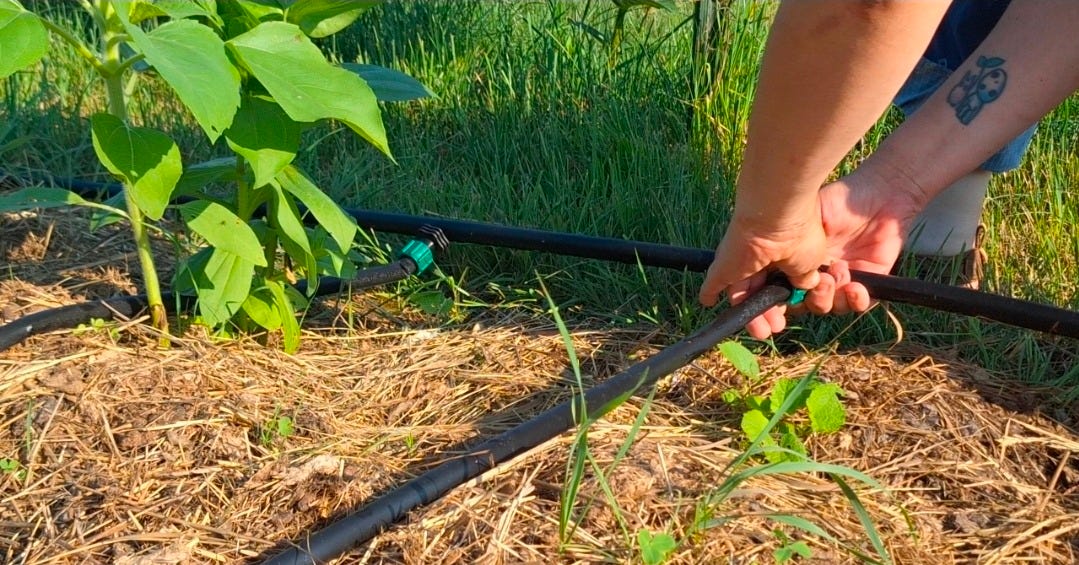
Sweat dripped off my chin into the soil below as I tightened the clamp on the emitter, connecting the drip tape to the header line on the irrigation system. It wasn’t even eight o’clock yet and already the temperature was well above eighty degrees and climbing. Covered in a sheen of perspiration, I worked to install irrigation to the back end of the garden. The system on the front half had gone in back in May, if you recall. We’d had plenty of intermittent rains and showers, so I hadn’t had to worry much about irrigating until this week’s heat wave. Then, installing a system for the more recently established plots—where my beans, carrots, beets, and potatoes are planted—suddenly became an urgent priority.
Between the heat wave and BraeTek picking up extra evening shifts at the restaurant, my usual routine has been upended. He works until ten or eleven at night, Mom does Uber, and I’m getting to bed much later than normal. That means getting up at 3:45 a.m. isn’t happening, but I still can’t seem to sleep much past sunrise—so I’m up by four-thirty regardless and into the office for my morning writing session.
To make sure I can give the garden its daily due, I’ve been cutting my office time short. I’ve been in the garden as early as six-thirty this week and not later than seven-thirty, trying to beat the heat. I’ll work as long as I can stand it, but ever since the Bigelow trip that gave me heat stroke, I just can’t tolerate the heat like I used to. My stomach starts turning, I get dizzy, overheated, and woozy. Once I reach that point I know it’s time to call it.
Making up for lost time in the office, I’ve given part of my afternoons to writing from the comfort of our air-conditioned living room. It’s been only the last few years that I’ve caved to AC. We put one in the living room, and one on the porch where the farmstand lives—but only at the height of the season, and in the name of food storage and feeding my local community.
Our bedrooms upstairs are hot as an oven, but we make do with fans, and this is the time of year my still-teenage son tends to congregate in the living room during the day instead of staying sequestered in his room. This mom is not complaining.
I’m thrilled with my irrigation setup this year, and glad I gave drip tape another try. It would have been foolish not to, when I had so much of that material stockpiled from my younger years—back when I thought I was superwoman and ambitious enough to cultivate two acres by myself.
The garden is divided into several irrigation plots, each with its own header line and drip tape assembly. The middle section, with the raised and formerly raised beds, is a little awkward for that setup, so I’ve run soaker hoses through there instead. To turn on a header line, I simply open the valve on the corresponding Y-attachment. The soaker hoses take a bit more effort—connecting a hose to one section or another—but it’s not terrible.
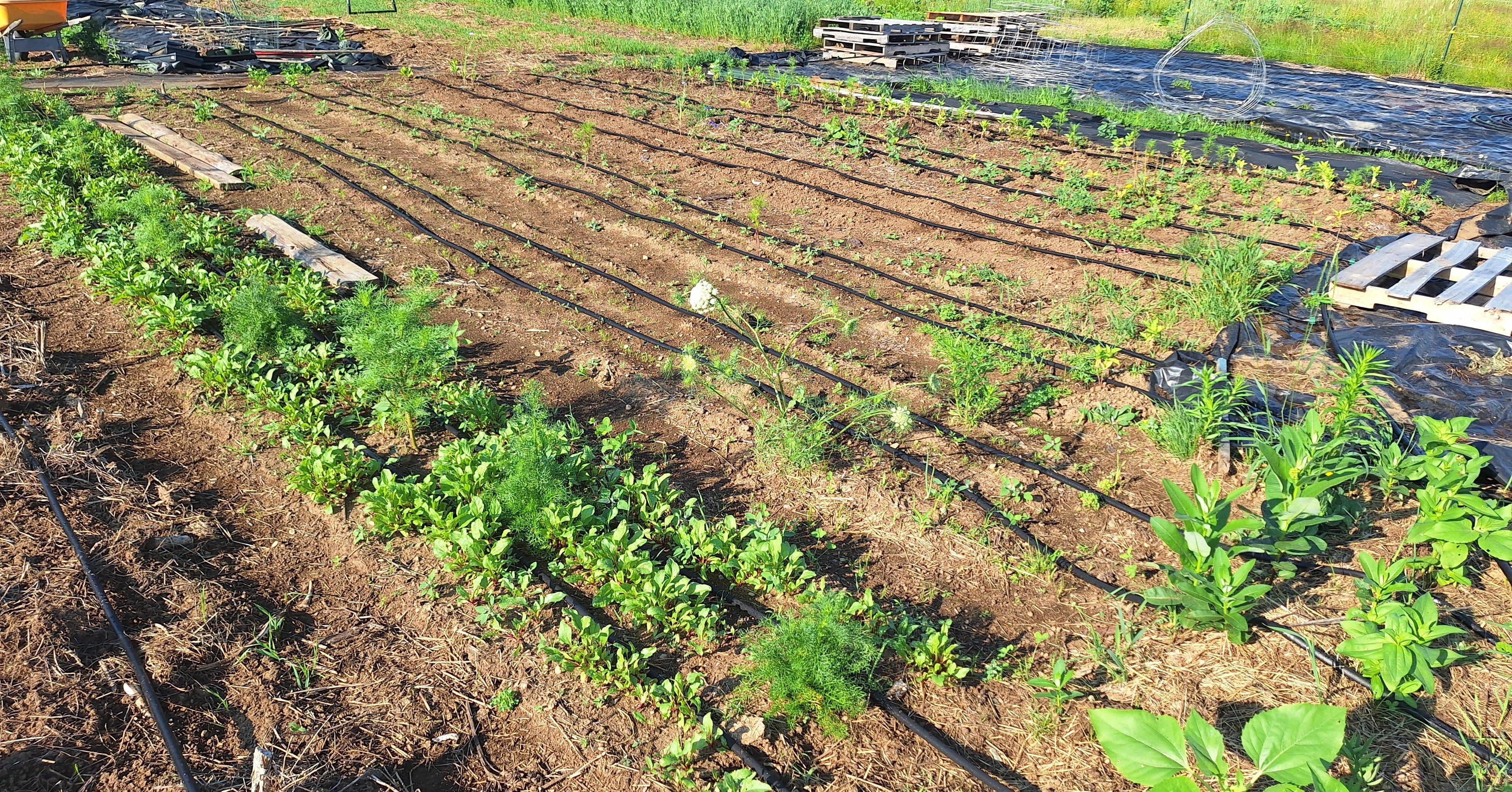
My problem with drip tape the first year I used it was a preexisting rodent problem. Voles, rats, and mice, paired with a droughty season meant the rodents were biting through the tape to get at the water. That meant a lot of water was getting wasted (we have town water), and I was spending too much time repairing lines.
Since then, I’ve gotten the rodent situation under control (long story, different post), and this season has been more typical, with more rain—though we’re still technically in a drought here in Maine. Even so, I am fastidiously checking every time I bring a system online, making sure end caps are in place and I’m not losing water somewhere. My water bill is high enough without adding unnecessary waste to it.
Prioritizing Projects
Otherwise, I’ve been plugging away at various projects. I’m working to get myself to a place where I can step back from the garden and landscaping work long enough to clean and organize the outbuildings—the garage and the barn. Once I can move around in the barn and know where my tools are, I can get to the woodworking projects on my list. I’d like to say the Aldo Leopold bench and the kiosk for the conservation trails are next—but the barn ramp has reached a critically dangerous point, and it has to come first.
Built from two stout logs covered with two-by-sixes, the boards on the ramp have long since started rotting. Just before I bought the house, one of the previous owners put a foot through the ramp and they simply covered the whole thing with plywood to ensure the sale. Eight years later, the plywood is rotting on top of the rotted boards, and last week Beebe went through a corner of it. The whole thing is soft and I’ve cautioned BraeTek to walk only on the part with a log underneath.
The entire ramp has to be removed, and I’ll have to decide whether to rebuild it or put in stairs. The worst part: the whole thing was constructed with nails, so taking it apart means a sledgehammer and a lot of lady power, and I am not looking forward to it. I much prefer building with screws for this exact reason. You never know when you’ll need to repair, modify, or replace something on the homestead.
Putting the Truck to Work
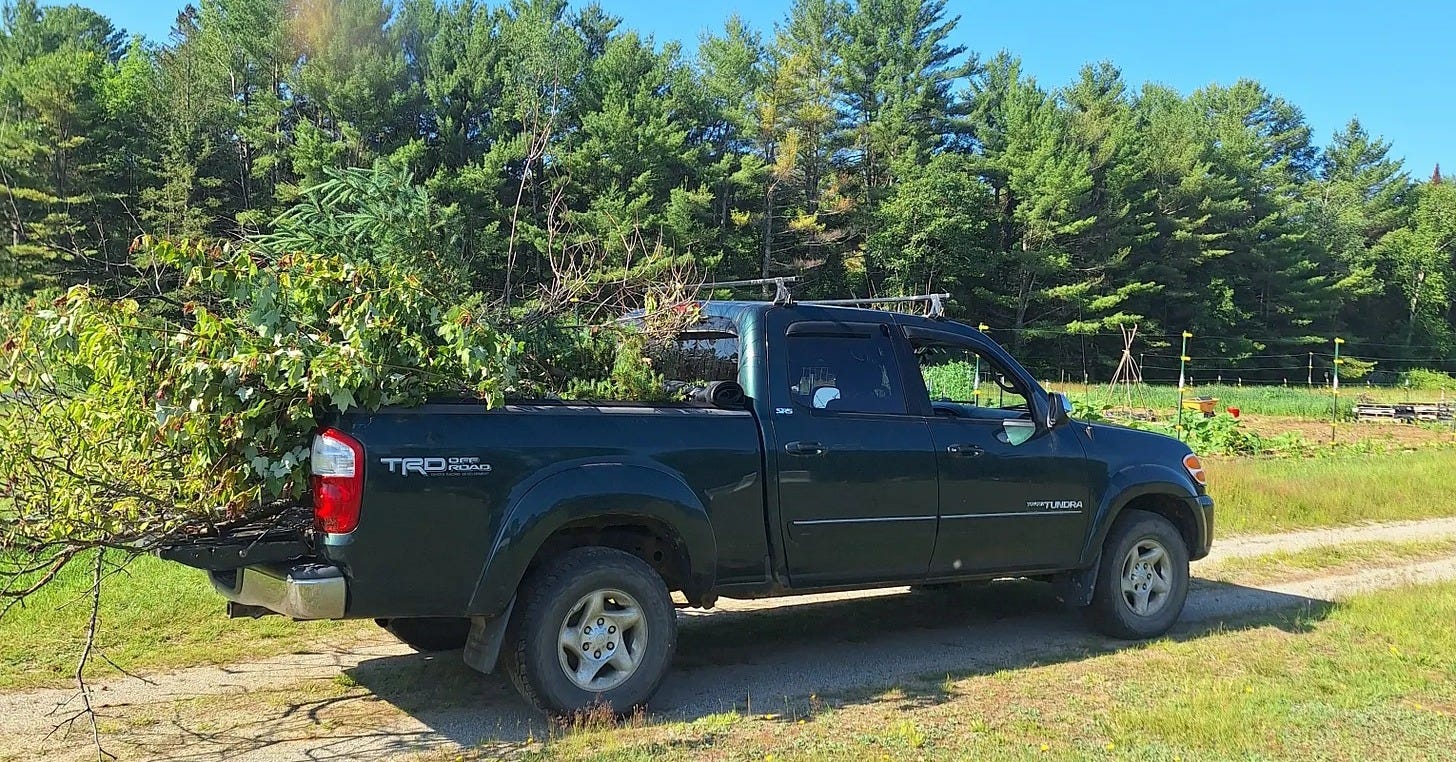
When last we left off, I had just sold the Runamuk sheep flock and hoped to make an offer on a nearby Toyota Tundra (read that post here). Between the crowdfunding efforts and the funds generated from the sale of the sheep, I was indeed able to bring home the new-to-me Runamuk truck! Yaaaaaaaaaaaaaaay!!!
This victory would not have been possible if it were not for this community.
Thank you to everyone who donated, shared, restacked or otherwise sent
good juju and prayers to make this a reality.
Living rurally, we’re responsible for our own trash removal. To avoid paying someone to haul it, this is a task BraeTek and I have tag-teamed since we moved here. With no vehicle these last few months, you can imagine how backed up that got—so one of the first things we did after bringing the new-to-me Runamuk truck home was to make a couple of trips to the local transfer station.
It’s not glamorous, and it’s not something I’m keen to share—but homesteading and living in the country is a dream a lot of us fantasize about, and this is a part that rarely gets attention. I’m fortunate to have an addition on the barn that connects to the main house where we can store the bagged trash, cardboard and other discarded items while keeping wildlife out. I also put very little food waste in the trash to begin with; that all goes in the compost bucket.
Before this week’s heat wave, we caught up on mowing—more or less. I also took the chainsaw around and cut down a handful of dead shrubs and branches, some young saplings growing up out of the foundation on the back side of the house, and the limbs of an oak that had grown these last few years and started blocking my view pulling out of the driveway. All of that got hauled out to the field, onto the pile I’ll burn next spring.
The truck’s definitely earned its keep since arriving.
ICYMI


What’s Coming Up
We’ve got a busy line up these next few weeks! Be sure to mark your calendars!
➡️7.6 - Talking Dirt with Beccalynne | Grow With Me
➡️7.7 - Joining Adam Cohen LIVE
➡️7.11 - AgStacker RoundTable is BACK! with Helen Freeman
➡️7.17 - Talking Dirt with Soil Sister - Kylie Woodham
➡️7.21 - Joining A.S. Todd on the Rooted Rebellion podcast
Eighty Degrees by Eight AM
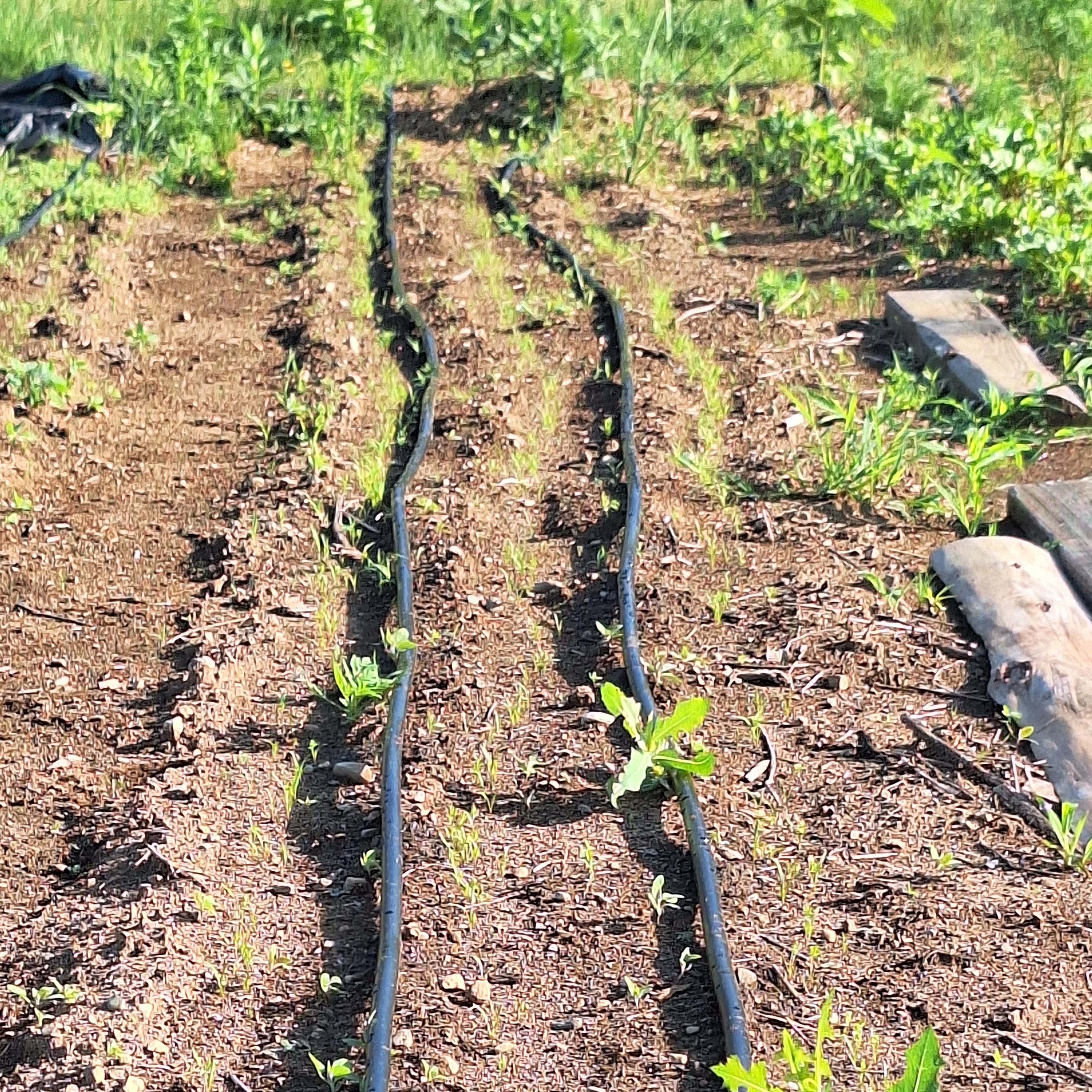
With each of the 28 drip tape lines connected, I set about capping the ends. My method: fold the end of the line so I can cram it into the rectangular opening on the plastic cap. I wedge it in tight enough that the water pressure won’t push the cap off. Sometimes I use a tool to seat it. Mostly I’m using my thumbnails, and my fingertips are sore by the twentieth cap.
You'd think the victory comes when you turn on the water—watching it fill the header line, then slowly spill out into one long drip line after another. But no—that's when the troubleshooting starts. Don't forget the pressure regulator, or you'll blow your lines.
Ask me how I know.
Next, patch any holes or tears. Depending on where they are, you might need a rubber plug or a double-ended connector, or you might just need duct tape. I recommend the Gorilla tape.
Sometimes the end caps pop off, like I said. You sort the issues one by one, then go back through the whole system for a tenth time, adjusting lines along your row so the water reaches the roots of your plants directly.
And finally—finally—it’s all set up and working the way you’d hoped it would.
I stand there for a moment and just listen—water hissing through the tape, soaking into the dirt under my beans, carrots, beets, and potatoes. It’s SO satisfying.
And then, at ten in the morning, I beat a retreat to the house for a cold shower and a glass of ice water.
Until next week, farm friends.
Sending love and good juju to you and yours.
Your friendly neighborhood farmer,
—Sam
P.S. — Next week's paid post is a check-in on Six Months to October—where the numbers stand heading toward winter, and what it'll take to avoid an off-farm job once heating season hits. Budget tracker screenshot included.
What's one "unglamorous" farm or homestead task
nobody warned you about?
🫶 Ways to Support Runamuk
Make a one-time donation through PayPal or Venmo — every bit helps keep the farm and the writing going.
Purchase a farm-share for yourself, or donate the funds to a family in need.
Check out Runamuk’s Amazon Wish List to buy the farm a gift.
This post lives in our “Farm-Blog” category.
See what else lives there.
Thanks for sharing 🙏
Same here, the heat index is supposed to hit the triple digits this weekend.